
Online estimate vs professional appraisal
A photo-based resale estimate helps with early research and ordinary selling decisions. A professional appraisal is a purpose-specific opinion that may be needed when the decision requires a defined scope, specialist evidence or formal documentation.
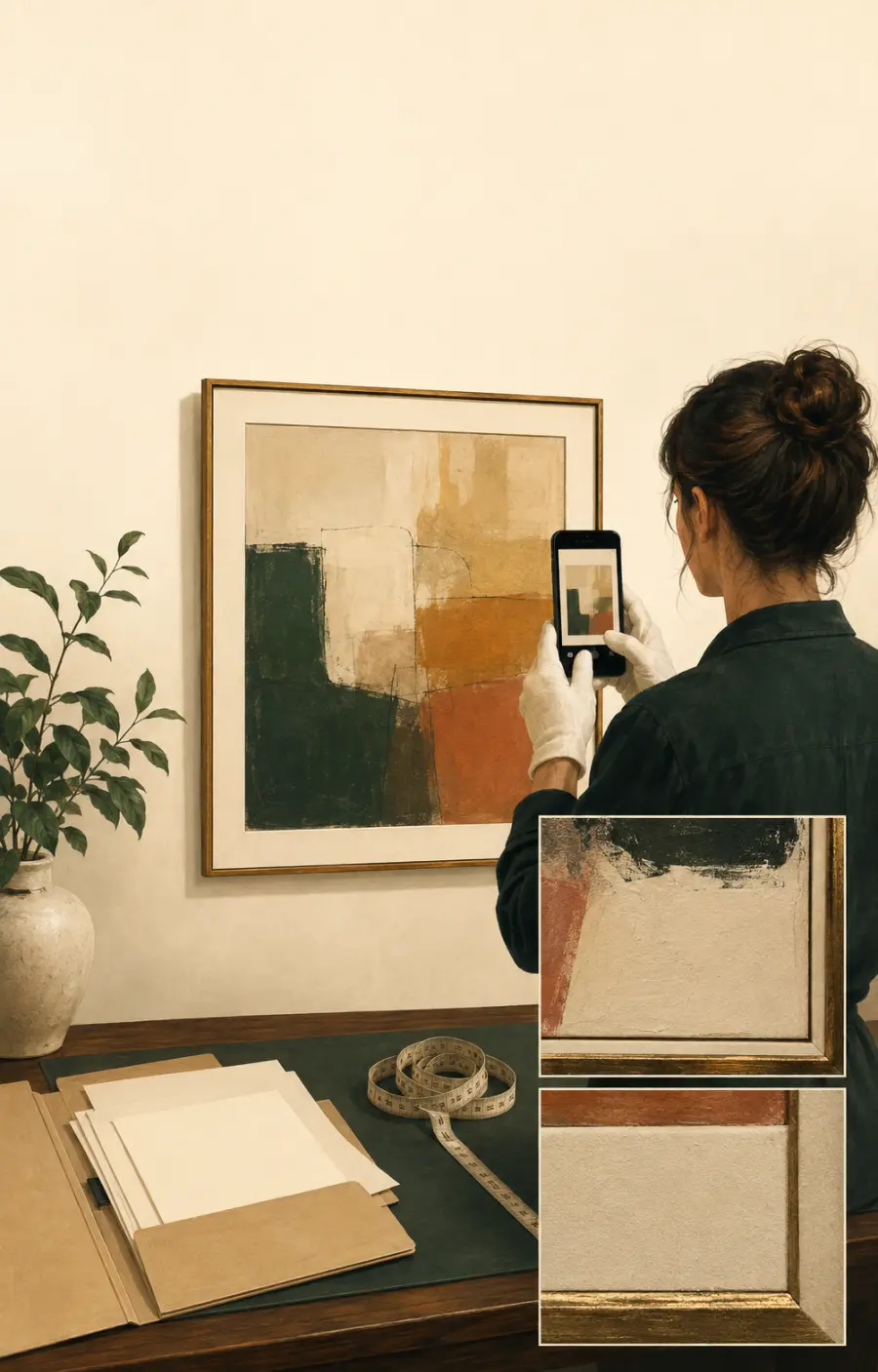
Which decision should determine your valuation route?
“What could this realistically sell for?” is different from “What report does my insurer, executor, adviser, court or organisation require?” The right route follows the purpose, not whichever label sounds more official.
A photo result can identify a likely item, surface visible differences, find close completed sales and tell you whether more effort is justified. It is not a formal appraisal, authentication, grade, guaranteed sale price or legal advice.
When is an online estimate useful for early resale research?
A photo-led estimate is most helpful when there are visible identifiers and a market with comparable sales. It can tell you which mark to photograph again, whether to separate one item from a lot, how to prepare a careful listing or whether specialist attention is sensible.
Read the evidence and limitations with the range. A result should keep visible facts, supported inferences and unresolved questions separate rather than hiding uncertainty behind a precise-looking number.
What can a professional appraisal add?
A qualified professional may define the assignment’s intended use, scope, evidence, inspection needs, reasoning and report. The exact process depends on the object, purpose, jurisdiction and professional engaged.
A photo submission can still help a professional understand the object and decide whether a review is appropriate. It is not necessarily the full examination. Ask the person or organisation that needs a report what qualifications, value basis and format they require.
Which valuation route fits your purpose?
The two paths can work together: use careful photos and early research to prepare questions, then seek professional review when the decision needs it.
| Question | Photo-based resale research | Professional route may be appropriate when |
|---|---|---|
| What is this? | Likely candidates and visible clues | Material, age, attribution or authenticity must be established |
| What might it sell for? | Cautious range from close completed sales | A specialist market or formal written opinion is required |
| How should I sell it? | Evidence, condition and channel research | A high-consequence decision depends on specialist verification |
| What does an institution need? | Organised photos and questions | Insurance, estate, tax, legal or disputed-use requirements apply |
When should you pause before selling or altering an uncertain item?
Consider suitable qualified help when the item may be important artwork, jewellery, a watch, rare book, antique, cultural object or specialist collectible—or when authenticity, condition, materials or provenance drive the decision.
Before cleaning, repairing, opening, polishing or discarding papers, take clear photographs and note what you know about ownership, purchase, service, restoration or prior evaluation. Alteration can remove evidence.
What belongs in an evidence packet for a professional?
State the purpose of the request and who will use the result. Bring full-object and detail photos, dimensions, documents, past reports, receipts, service records and an honest description of repairs, damage and unknowns.
Ask about relevant category experience, inspection requirements, scope, report format, fee basis, timing and any conflicts. Be cautious of a high-value promise made before enough evidence is reviewed.
- Keep original documents and label copies clearly.
- Do not send credentials, private account information or unnecessary sensitive data.
- Preserve what you do not know instead of filling the gap with a claim.
How do you use an online result responsibly?
Treat a photo-led range as a decision tool: it can tell you to retake a mark photo, search a few close sales, choose a selling channel, separate an item from a lot or get expert advice. It cannot replace evidence it does not have.
If the object is still unknown, identify it first. If the photos are weak, improve the evidence before expecting a stronger outcome.
For an unfamiliar item, identify it from a photo before deciding whether an early resale estimate or professional route is appropriate.
Resale prices vary by evidence, condition, venue, fees, timing and buyer demand. A photo-led result is not a formal appraisal, authentication, grade or guaranteed sale price.
What questions should you ask before commissioning a report?
Tell the professional who will rely on the report and what decision it supports. An insurer, court or tax authority may require a particular format or qualification; confirm requirements with the recipient before paying.
- Do you regularly appraise this category and this type of assignment?
- What definition of value and valuation date will the report use?
- Will you examine the object in person, and what testing is excluded?
- What documents, provenance or comparable evidence do you need?
- What is the fee basis, delivery time and scope of the written report?
- Do you have an interest in buying or selling the item?
The Appraisal Foundation publishes USPAP information for the U.S. appraisal profession. Requirements vary by assignment and jurisdiction. A badge, an auction estimate and an insurance schedule are not interchangeable evidence of a suitable report.
Why does a free auction estimate have a different purpose?
An auction house may assess whether an object suits its sales and suggest an auction estimate. That is not automatically a formal appraisal for another institution. Christie’s explains its auction-estimate submission process; check the scope of any result you receive.
What should you record before contacting an appraiser?
Use the details above to describe your own item. These notes stay in this page while it is open; they are not saved or sent for analysis. Copy them before leaving.
Notes stay in this open page until you copy them.
What should you verify before choosing an online estimate or appraisal?
Is an online estimate an appraisal?
No. An informal resale estimate and a formal appraisal serve different purposes. This site provides research guidance and photo analysis for visible clues and possible candidates; it gives a ballpark range as an explicit guess, not a formal appraisal.
Can a photo prove authenticity?
Usually not on its own. Photos can show clues and red flags, but authentication may depend on examination, materials, provenance, records and specialist knowledge.
Does an insurance value equal resale value?
Not necessarily. Different purposes can use different value definitions and evidence. Confirm the requirement with the organisation that needs the information.