
Identify an unfamiliar item from its visible clues
Start with shape, marks, dimensions and construction. The photo analysis identifies visible clues and possible candidates, and gives a ballpark range when the evidence supports one; it does not authenticate an item, and the range is a guess rather than market data.
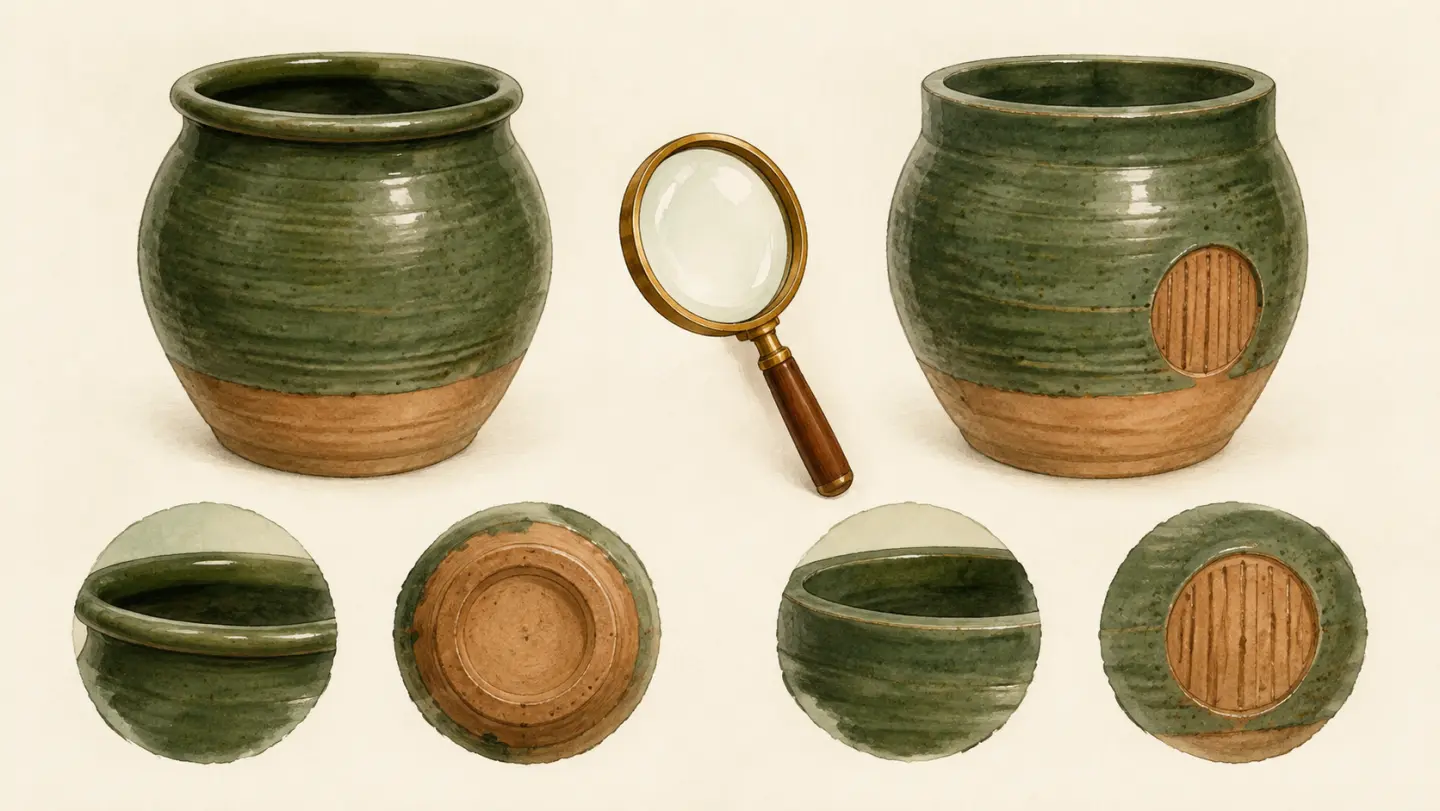
How do you separate observations from a possible identity?
- Visible cluesWrite what you can actually see: a handle, opening, impressed letters or a measurable dimension.
- Possible alternativesKeep two plausible explanations when the evidence does not distinguish them.
- The deciding detailLook for the mark, base, mechanism or measurement that would support one candidate over the other.
For readable detail shots, follow the item photography checklist.
How do you build a search from an object’s attributes?
Combine a possible function with material, shape, dimensions and exact visible text. For example, “small brass container hinged lid pierced top” gives you more to investigate than “old valuable thing.” Keep uncertain material descriptions qualified: “brass-coloured” is safer than “solid brass” before testing.
Search exact readable words in quotation marks, then compare the candidate’s underside and construction as well as its front. A decorative resemblance is a lead. A model label or a distinctive mechanism is usually a stronger identification clue.
Which specialist checklist matches the item in your photo?
- A ceramic base mark belongs in pottery and porcelain identification.
- A printed model label leads to electronics model and configuration research.
- Joinery, hardware and furniture labels lead to furniture attribution.
- An unfamiliar older household object fits the antique identification checklist.
When should you leave the identity unresolved?
Do not force a match when the scale, markings or construction contradict it. Record what is missing and ask a relevant specialist when authenticity, material or historical importance matters. Do not open, energise, taste or chemically test an unfamiliar object merely to identify it.
How do you record evidence for an unresolved item identity?
Use the details above to describe your own item. These notes stay in this page while it is open; they are not saved or sent for analysis. Copy them before leaving.
Notes stay in this open page until you copy them.