
Coin value from a photo
A date alone is rarely enough. Clear identifying marks and condition details make the next research step more reliable.
Which evidence factors affect coin value?
- Denomination, date, mint and variety evidence
- Visible condition and certification
- Precious-metal and authentication verification
Which photos help identify and assess your coin?
Choose a clear whole-item photo, then add identifying details and condition views. Photo analysis can extract visible clues, likely candidates and a ballpark range; it does not authenticate the item, and the range is a guess rather than market data.
What should your coin photographs show?
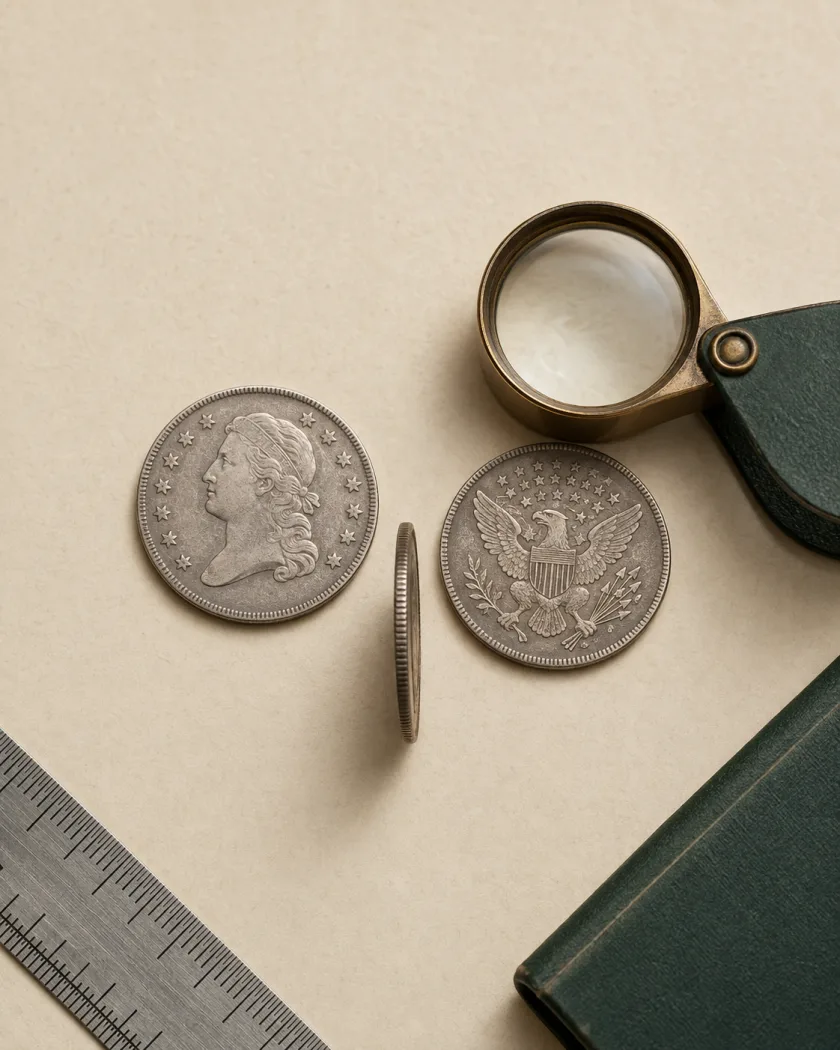
- Sharp obverse and reverse
- Mint mark and date close-up
- Edge detail when relevant
- Holder or certification label, if present
For lighting and framing techniques that apply to almost every category, use the photo guide for better valuation research.
Use even light and show defects instead of concealing them. Do not upload personal information, account screens or private documents.
Which coins deserve a closer look?
Start with the denomination, date and mint mark. A scarce date-and-mint combination, a documented variety or an unusual strike needs a different search from an ordinary circulated coin. Age, shine and a dramatic listing title do not establish rarity.
Swipe or scroll the table sideways to see all three columns.
| What you have | Detail to check | How to research it |
|---|---|---|
| Lincoln wheat cent | Date, mint mark and reverse initials | Match the complete date-and-mint combination before comparing grades. |
| Silver or gold coin | Issue, weight and verified composition | Separate collectible demand from the metal-content calculation. A plated copy does not share bullion value. |
| Possible error coin | Both sides, edge and the alleged error | Establish a mint-made error before using error-coin sales; wear and later damage need a different description. |
| Certified coin | Service, certification number, grade and designations | Check the certification record and match the holder description, including details grades or problem notes. |
Should I clean a dark or dirty coin?
Leave the surface as found. Polishing, rubbing and chemical cleaning can remove original surfaces and leave damage that changes the comparison category. Handle a loose coin by its edge and document it before seeking advice.
Is grading worth paying for?
First compare credible raw sales with sales at a conservative possible grade. Subtract grading, insured shipping, selling fees and the risk of a lower grade or problem designation. A high-grade auction result alone is not a reason to submit an ordinary worn coin.
References for this research
Guidance and examples checked . Manufacturer and retail pages support identification. Historical sale results apply only to the described specimens.
How do you record evidence for coin value comparisons?
Use the details above to describe your own item. These notes stay in this page while it is open; they are not saved or sent for analysis. Copy them before leaving.
Notes stay in this open page until you copy them.
Which U.S. coin auction records are documented for exceptional specimens?
These are realised prices for specific, exceptional specimens—not a price range for every coin with the same date or design. Grade, variety, originality, provenance and legal status can change the comparison completely.
1933 Saint-Gaudens Double Eagle
The Stuart Weitzman specimen; Sotheby’s, New York, 8 June 2021. Result rounded as reported in the source.
$18.9 million
View Sotheby’s auction record1794 Flowing Hair Silver Dollar
PCGS Specimen-66, CAC; Stack’s Bowers New York Americana Auction, January 2013.
$10,016,875
View Stack’s Bowers auction record1913 Liberty Head Nickel — Olsen specimen
NGC Proof-64; Heritage FUN U.S. Coin Auction, January 2010.
$3,737,500
View Heritage auction record
These dated results apply to the described specimens and sale circumstances. Research the exact version and condition of your own item before comparing prices.
Why can grade and surface condition change a coin result?
A photo can show wear and obvious problems, but it should not present a formal grade, variety attribution or surface diagnosis as settled.
Wear on high points
Show the full design under even light so remaining detail can be compared without mistaking shadows for wear.
Original surfaces
Toning, luster, hairlines, polish and marks need honest close-ups. Cleaning or wiping can affect the relevant comparison.
Damage versus a suspected variety
A close-up may justify further research, but post-mint damage, glare and ordinary strike differences are not proof of an error or variety.
To compare this condition with real transactions, follow the sold-comparable selection guide and worked example.
When should coin value research move to a specialist?
For the evidence required before a resale range is useful, see the valuation methodology. If the decision involves authenticity, insurance, estate or legal use, compare an online estimate with a professional appraisal. If you are still unsure what you have, begin by identifying an item from a photo.
What should you verify before relying on coin value research?
Is one photo enough to check a coin?
One clear view can start identification, but the reverse, edge, date, mint mark and any holder label often determine whether a comparison is relevant.
Can a photo confirm that my coin is an error?
No. A photo can flag an area for closer research, but it cannot conclusively attribute an error or distinguish every variety from damage or striking differences.